Digital Twin Technology Improves Efficiency in Industrial Heat Pumps

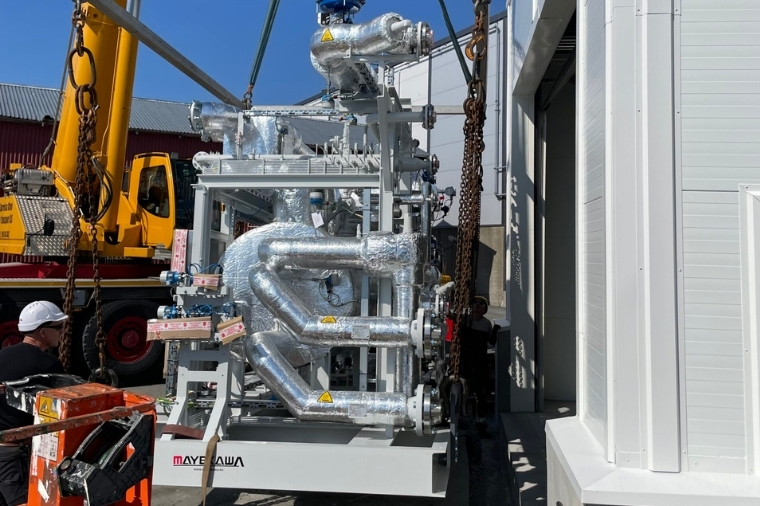
Digital twin models developed under the EU-funded SPIRIT project are being tested across different stages of industrial heat pump applications, from system design to the optimisation of real-world operating performance. Studies conducted at shrimp processing facilities in Norway, sugar production plants in Belgium, and paper manufacturing facilities in Czechia highlight the potential of digital twin technology to reduce energy consumption, improve heat recovery, and cut CO₂ emissions.
Digital twin technology is opening up new optimisation opportunities for industrial heat pump applications. By creating a virtual model of a physical system or industrial process, different operating conditions, system designs, and energy scenarios can be analysed digitally before they are implemented at an actual facility.
According to information shared by the European Heat Pump Association (EHPA), this approach is now being applied to industrial heat pumps as part of the European Union-funded SPIRIT project.
What Is a Digital Twin in Industrial Heat Pumps?
A digital twin is a virtual representation of a physical piece of equipment, system, or process created using data. In industrial heat pump applications, digital twins can be used to model system performance, analyse energy consumption, determine heat recovery potential, and compare different design options.
This allows engineers to test different scenarios virtually before making changes to the actual system. Integrating real operating data into the model can also help identify differences between theoretical and real-world performance.
First Results from the SPIRIT Project Presented
The first results obtained from the SPIRIT project's industrial heat pump digital twin models were presented during EHPA's Heat BIG webinar series.
The webinar, which brings together end users and the industrial heat pump sector, provided examples of how digital twins can be used not only for theoretical modelling but also to optimise systems in real industrial facilities.
Manuel Gräber of TLK Energy presented new web-based tools developed by the company.
Pinch Analysis Helps Optimise Heat Recovery
One of the tools presented helps analyse how much energy a heat pump will consume and how much heat can be recovered from an industrial process.
Known as “pinch analysis,” the method evaluates hot and cold process streams to identify opportunities for heat recovery.
The analysis can be used to develop more efficient heat recovery strategies. This approach can contribute to more accurately determining the required heat pump capacity, reducing system size and initial investment costs, and lowering operating expenses.
Different Refrigerants Can Be Compared Digitally
Another tool developed by TLK Energy focuses on industrial heat pump design.
The tool enables users to create different heat pump configurations, compare refrigerant alternatives and circuit concepts, and carry out optimisation aimed at improving system energy efficiency.
This makes it possible to compare different technical options during the design phase before implementing them in a real system.
Both tools developed within the SPIRIT project are available free of charge.
Digital Twins Are Being Tested at Three Industrial Sites
Real-world applications of the technology under industrial operating conditions were another important topic of the webinar.
Wouter de Vries of TNO, Emil Navntoft Pedersen of the Danish Technological Institute, and Jens Oliver Gollasch of DLR presented work being carried out at three industrial heat pump demonstration sites within the SPIRIT project.
The project covers three distinctly different production processes:
• Shrimp processing in Norway
• Sugar production in Belgium
• Paper production in Czechia
The heat requirements of these facilities vary considerably, ranging from cooking seafood to producing low-pressure steam. Despite these differences, digital twin technology can be used to analyse and optimise heat pump systems across all three industrial processes.
Digital Models Are Compared with Real Operating Data
Results obtained from the SPIRIT project so far indicate that digitally modelled system performance can be compared with real operating data.
This comparison can help determine the conditions under which a system operates more efficiently and identify optimisation opportunities that could reduce energy consumption.
The use of digital twins in industrial heat pumps can contribute to greater energy and fuel savings, lower operating costs, and reduced CO₂ emissions.
The technology also enables more detailed assessment of how heat pumps can be integrated into industrial applications with different temperature levels and process requirements.
The Role of Digital Twins in Industrial Heat Pumps Could Expand
Work on the models developed within the SPIRIT project is continuing. Developers are refining the digital twin models using data collected from real facilities, while the technology is expected to support broader applications of industrial heat pumps in the future.
Industrial heat pumps represent an important option for recovering waste heat, electrifying process heat, and reducing fossil fuel consumption, particularly in energy-intensive industries. Digital twins are emerging as one of the tools that can help analyse these systems during the design stage and optimise their performance during operation.
EHPA Head of Innovation and webinar moderator Sonia Bianconi also highlighted funding opportunities for industrial heat decarbonisation. Bianconi encouraged participants to follow the European Commission's industrial heat decarbonisation auction, which is planned to open in December with a budget of €1 billion.
What Can Digital Twins Bring to Industrial Heat Pumps?
Digital twin technology enables an industrial heat pump or the process to which it is connected to be modelled virtually, allowing parameters such as energy consumption, heat recovery, refrigerant selection, and system design to be analysed before real-world implementation.
Models supported by actual operating data can also enable continuous evaluation of system performance and help optimise energy use.
Sources
• European Heat Pump Association (EHPA) – Shrimps to sugar: discovering ‘digital heat pump twins’
• SPIRIT Project – Industrial Heat Pump Digital Twin Models
• TLK Energy – SPIRIT Pinch Analysis and Industrial Heat Pump Design Tools