Alternative Refrigerants to R410A Under Review: What Does New Research Show?

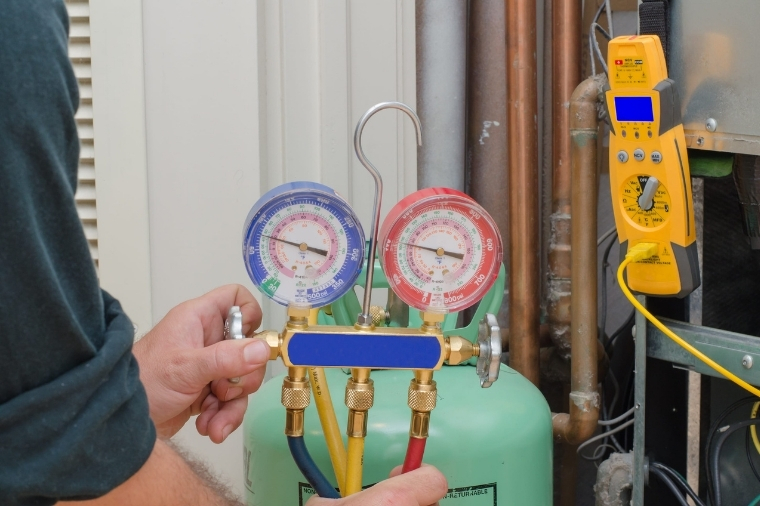
A new comprehensive review published in the International Journal of Refrigeration evaluates alternative refrigerants to R410A, widely used in air-conditioning and heat pump systems, in terms of performance, global warming potential (GWP), and safety. The study identifies R454B as one of the alternatives offering performance comparable to R410A, while highlighting that simultaneously achieving low GWP, high energy performance, and safety remains one of the key challenges facing the HVAC&R sector.
Published in August 2026 in Volume 188 of the International Journal of Refrigeration, the study, titled “Comprehensive review of alternative refrigerants to R410A: progress, challenges, and future directions,” was authored by Mariam Kamal Kadhem and Ali Khalid Shaker Al-Sayyab.
The study provides a comprehensive comparison of pure refrigerants and refrigerant blends that could replace R410A, based on the existing scientific literature. In addition to energy performance, the assessment considers global warming potential, flammability, toxicity, material compatibility, and potential modifications required for existing systems.
Alternatives Including R32, R454B, R1234yf and R290 Evaluated
The review examines alternatives including R32, R454B, R452B, and R1234yf, as well as natural refrigerants such as R290 and various HFC/HFO blends. Their potential is assessed across a range of HVAC applications, from residential and commercial air-conditioning systems to VRF systems, chillers, and heat pumps.
According to the study's findings, R32 offers strong thermal performance but has certain limitations related to its GWP and flammability characteristics. R1234yf, which has a low GWP, provides environmental advantages, although its performance may fall behind that of R410A in some applications.
The study particularly highlights R454B as a notable alternative due to its performance being comparable to R410A. However, R454B's A2L classification and mildly flammable characteristics mean that system design and relevant safety requirements must be carefully considered.
There Is No Single “Ideal” Alternative to R410A Yet
One of the key conclusions of the review is that selecting a refrigerant to replace R410A cannot be based solely on GWP or coefficient of performance (COP).
The researchers point out that energy efficiency, low GWP, flammability, thermophysical properties, material compatibility, and system requirements need to be evaluated together. As a result, there does not currently appear to be a single refrigerant that performs best across all criteria simultaneously.
Future Research Focuses on Solutions With GWP Below 150
The study also identifies important research priorities for the post-R410A transition. In particular, developing new refrigerants with a GWP below 150 that can deliver high performance while remaining practical from a safety perspective is highlighted as a priority research area.
The development of new refrigerant blends that could facilitate the transition from existing R410A systems, along with the redesign of HVAC equipment for alternative refrigerants, is also considered important for future research.
Overall, the review shows that the refrigerant transition in the HVAC&R sector is not simply a matter of “choosing a gas with a lower GWP.” Instead, it represents a multidimensional engineering challenge in which performance, environmental impact, safety, and system design must be considered together.
Source: Mariam Kamal Kadhem, Ali Khalid Shaker Al-Sayyab, “Comprehensive review of alternative refrigerants to R410A: progress, challenges, and future directions,” International Journal of Refrigeration, Volume 188, August 2026, Article 106963. DOI: 10.1016/j.ijrefrig.2026.106963.